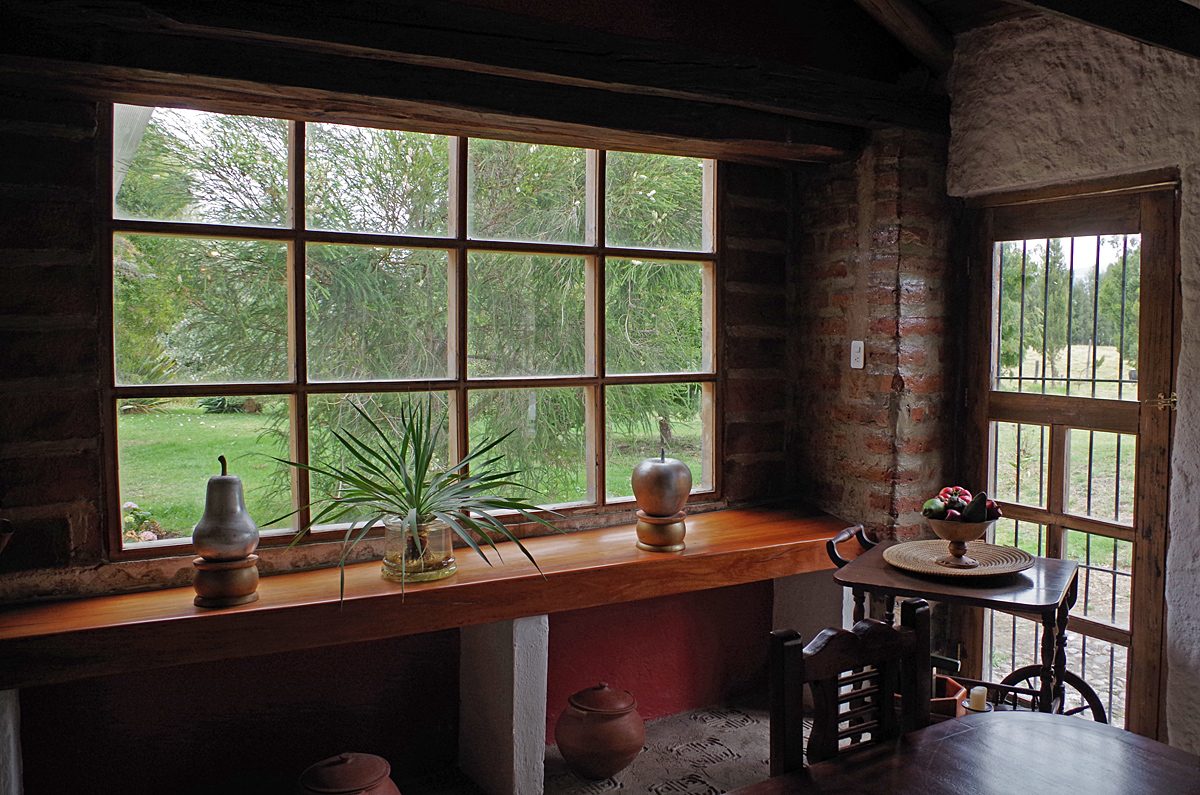
Mindo Cloud Forest

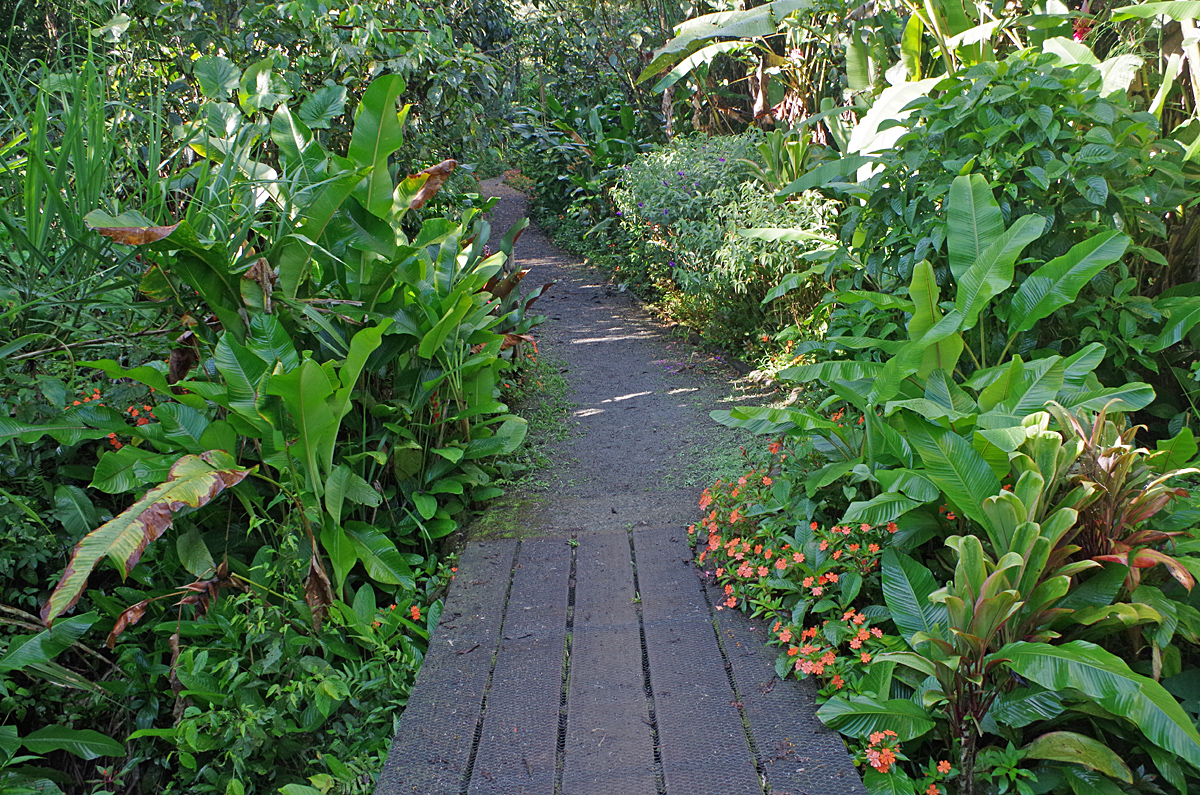
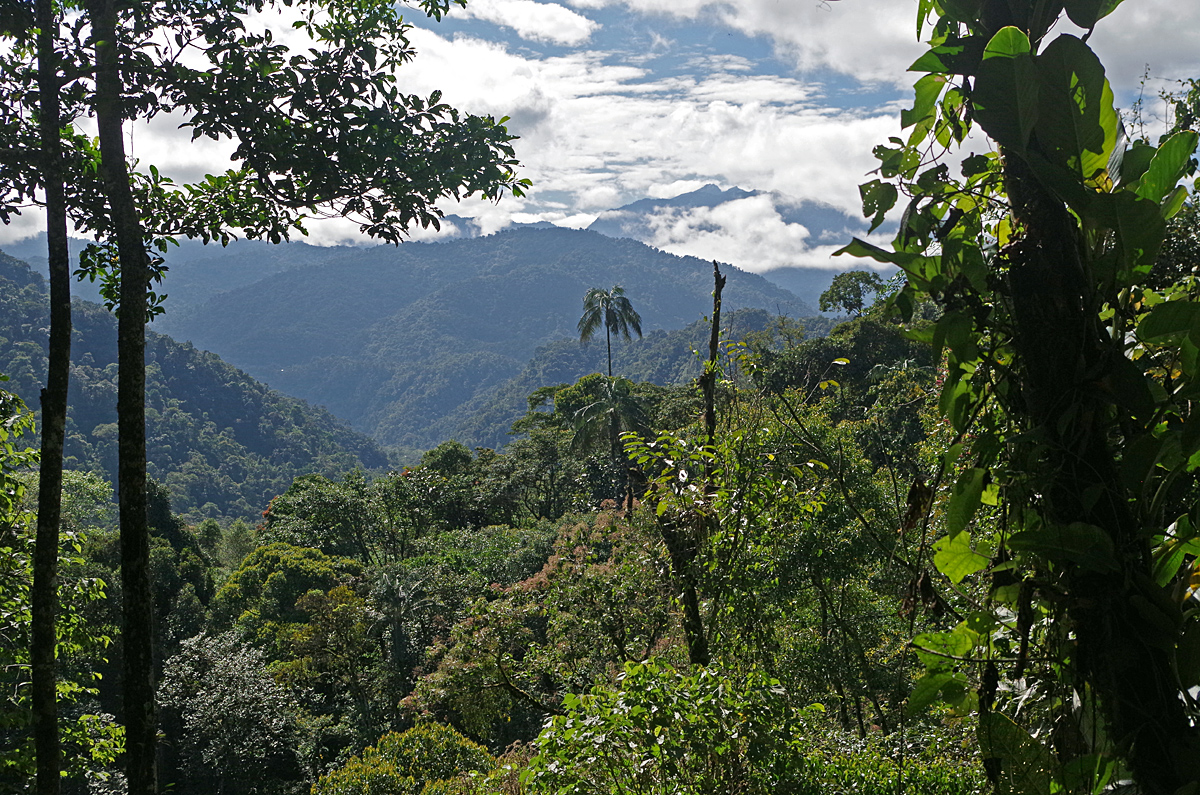
In Mindo, we stayed at Casa Divina Lodge, a remarkable getaway in the Ecuadorian cloud forest, northwest of Quito in the Andes Mountains. Casa Divina is hidden away, perhaps 5 kilometers away from the center of town, over unpaved roads, a steep bridge over the Rio Mindo, and a stream that crosses the road. Upon arrival, there are naturally landscaped boardwalks that lead to the lodge and its very private guest rooms.

casadivinalodge_walkway_0451_09272016_1200x795_90

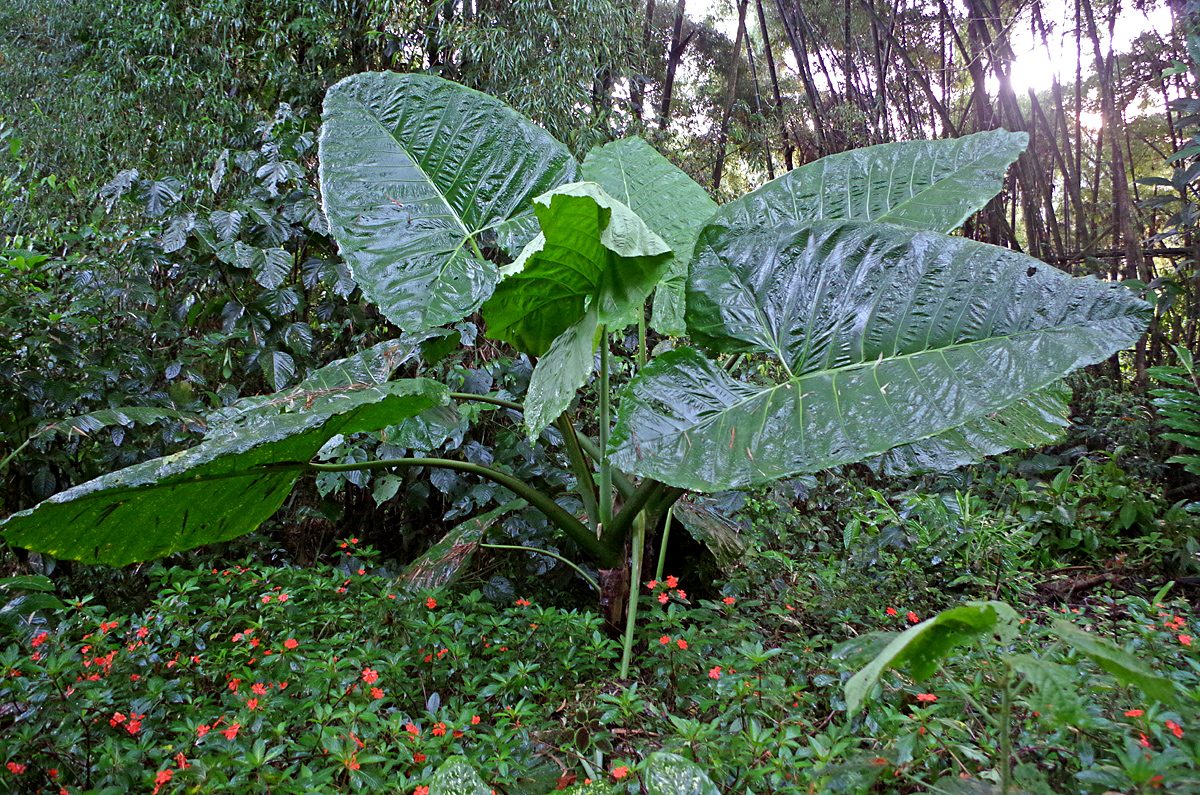
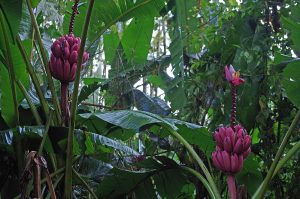
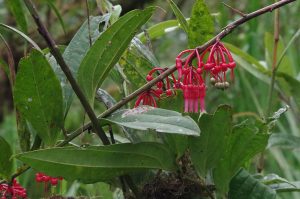
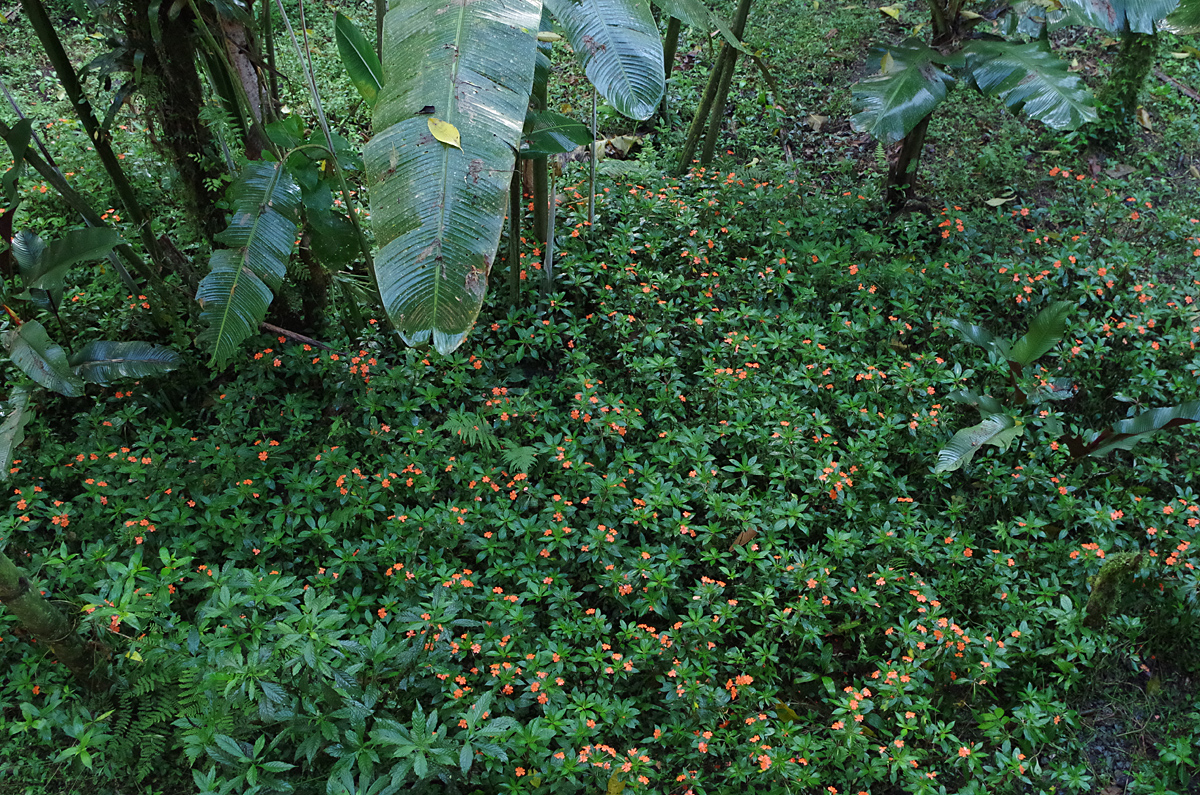
casadivinalodge_nativevegetation_0197_09262016_1200x795_90casadivinalodge_nativevegetation_0254_09262016_1200x795_90

The lodge is a big, welcoming space where meals are shared in an atmosphere of camaraderie. Upstairs, there is an open third level that is used as a treetop bird observation area at 6:00 AM, followed by sunrise bird observation walks, prior to a hearty breakfast. The guest rooms are remarkable, with sturdy hand-hewn furniture, beautifully decorated in an understated and eco-friendly manner. The bathrooms are truly beautiful, with stone tubs/showers, and there are porches that provides windows into the forest below, with comfortable furniture and a hammock. Our second-level room had a particularly pretty view into the treetops.

casadivinalodge_view-from-room_0430_09272016_1200x795_90
The view into the cloud forest from our porch

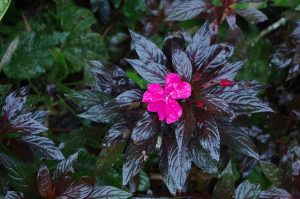
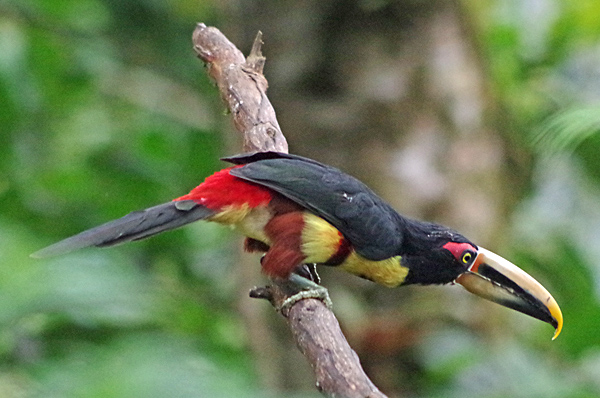
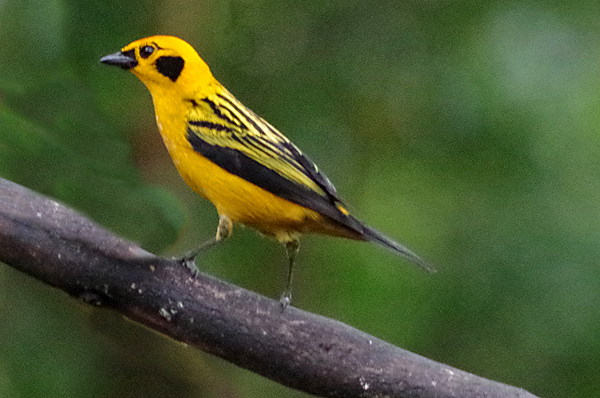
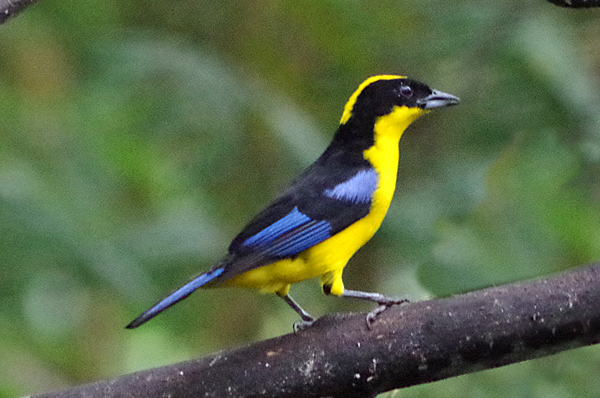
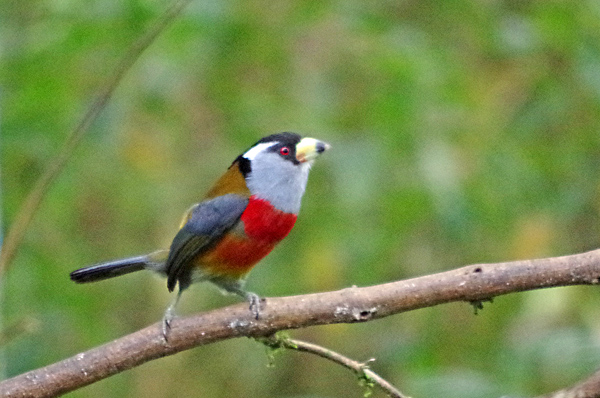
casadivinalodge_wildflower_0432_09272016_1200x795_90During our stay, owner Efrain Toapanta arranged for one of his fellow guides to take us out for a lengthy session of bird watching. With the assistance of this ornithologist, we identified 74 species of birds in one day, including 18 species of tanagers and 16 species of hummingbirds. Truly remarkable, and utterly amazing.

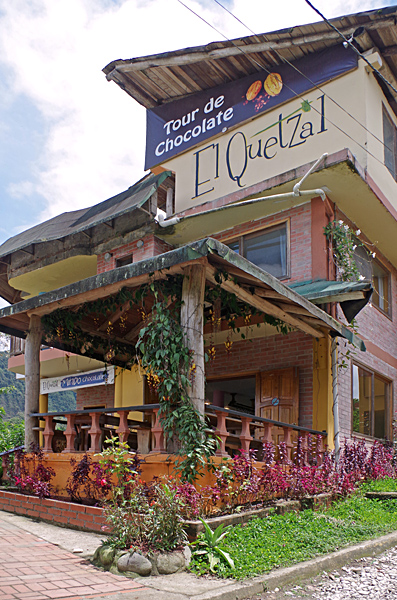
casadivinalodge_cloudforestview_0245_09262016_1200x795_90casadivinalodge_morningwalk_0211_09262016_1200x795_90Mindo is seeking to establish a casadivinalodge_morningwalk_0226_09262016_1200x795_90reputation as a destination for birding and a broader range of tourist activities, including white-water rafting on the Rio Mindo, a butterfly conservatory, and ziplines through the forest. Though Casa Divina Lodge concentrates on birding and more natural endeavors, the owners are at the forefront of developing a broad base of tourism appeal. On our way out, we stopped for a tour of the El Quetzal artisan chocolate company – a tasty and highly informative visit.


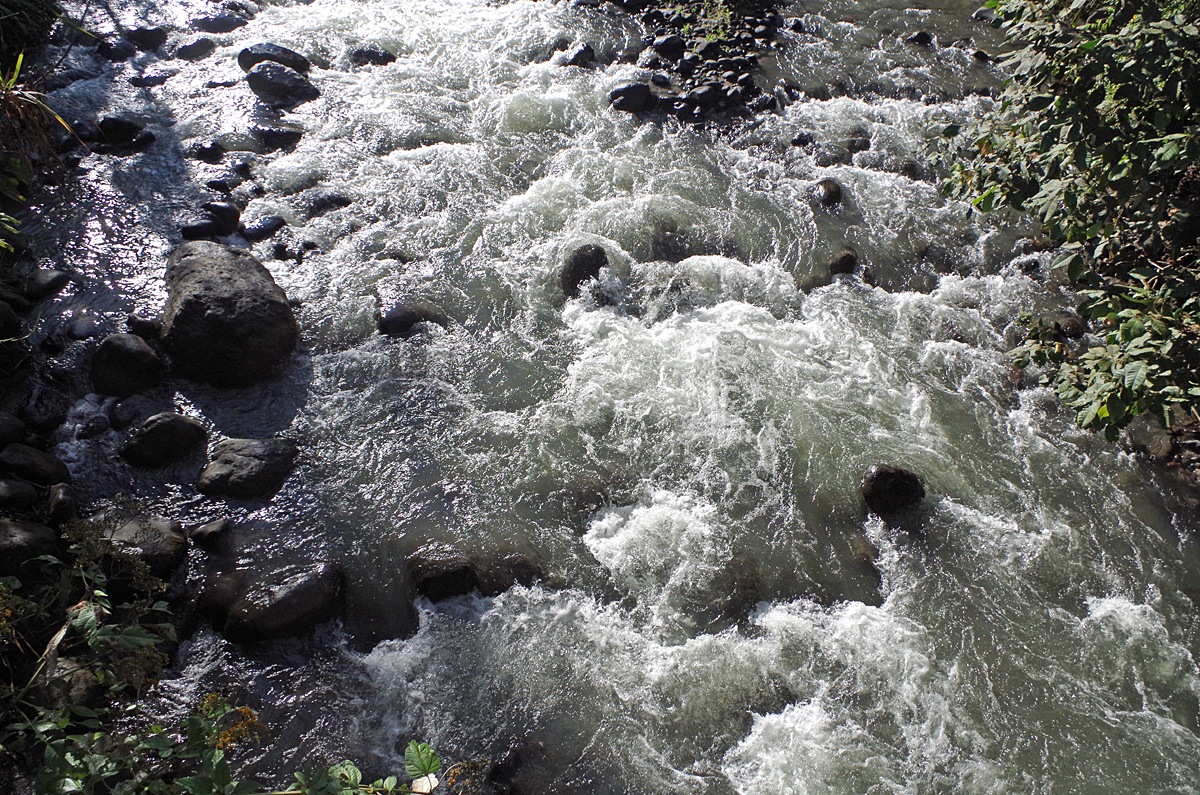
Rapids in the Rio Mindo
Aracari Toucan in the Mindo Cloud Forest
Golden Tanager in the Mindo Cloud Forest
Blue-Winged Mountain Tanager in the Mindo Cloud Forest
Toucan Barbet in the Mindo Cloud Forest.
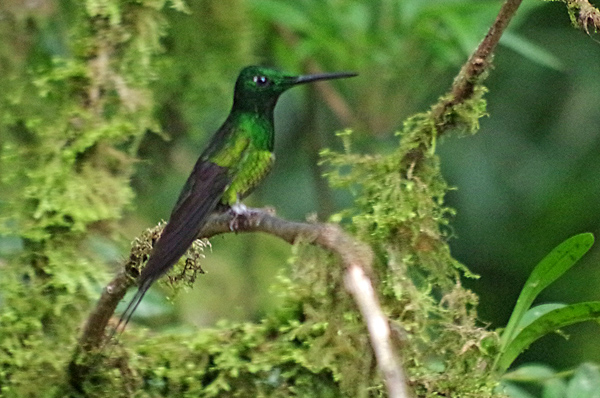
Empress Brilliant Hummingbird in the Mindo Cloud Forest
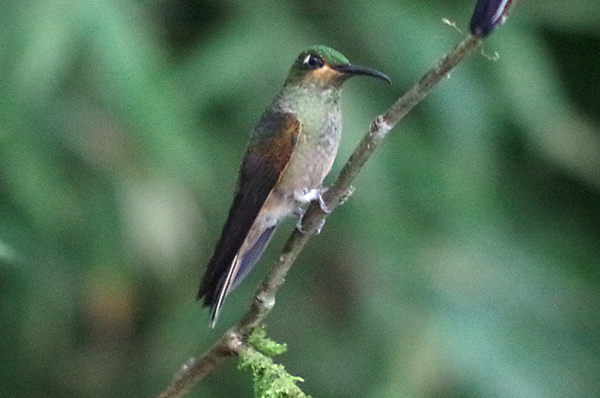
White-Necked Jacobin Hummingbird in the Mindo Cloud Forest
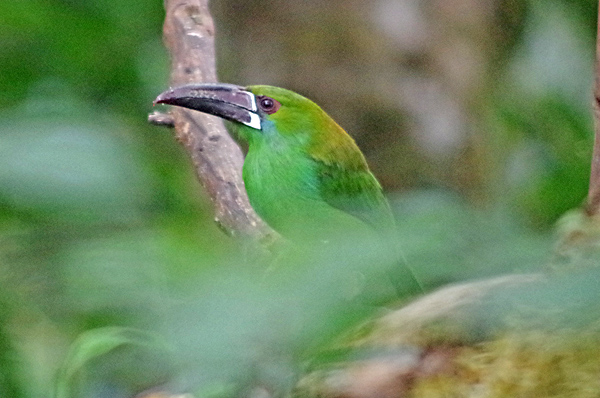
Crimson-Rumped Toucanet in the Mindo Cloud Forest
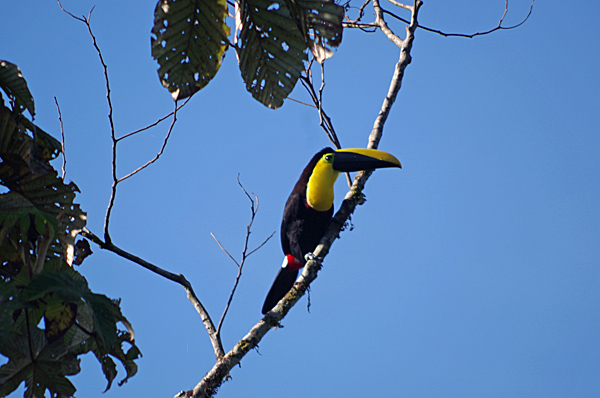
Choco Toucan in Mindo Cloud Forest
El Quetzal Artisan Chocolate Factory, Mindo


Cayambe-Coca National Park and the Cayambe Volcano

cayambe_accessroad_0643_09282016_1200x795_90

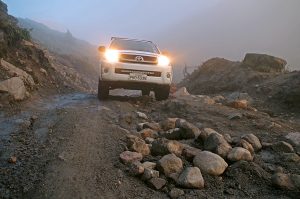
Cayambe-Coca National Park is the largest national park in Ecuador, extending all the way to the Amazon basin, where another highlight of our recent visit to Cayambe was our trip to the base of Cayambe Volcano. The trip from Cayambe to Cayambe-Coca National Park is an adventure in itself, steadily gaining in elevation as you progress from cobblestones and haciendas to the park entrance, treeline, and a single-lane gravel road that is characterized by steep drop-offs to one side and muddy ruts up to 2 feet in depth.

cayambe_haciendaview_0532_09282016_1200x795_90cayambe_alpinebog_0557_09282016_1200x795_90

cayambe_soillayers_0559_09282016_1200x795_90

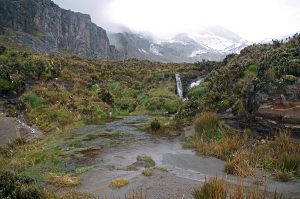
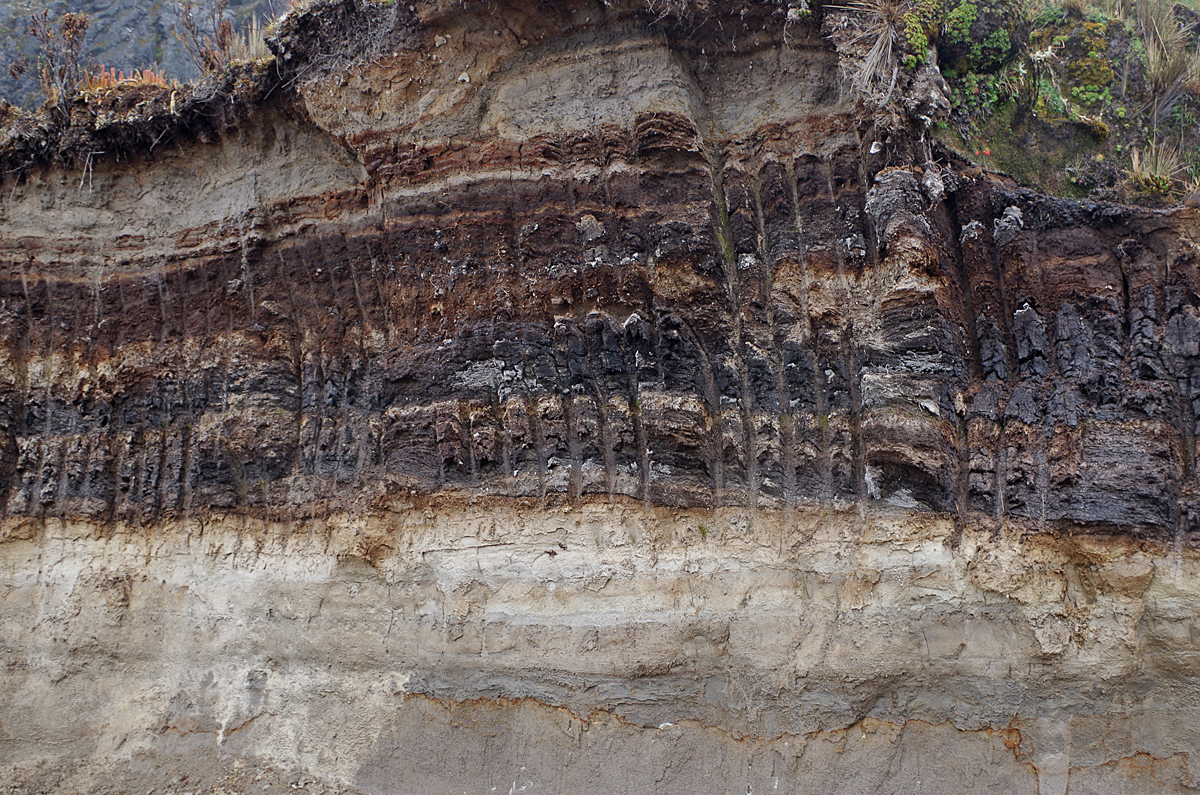
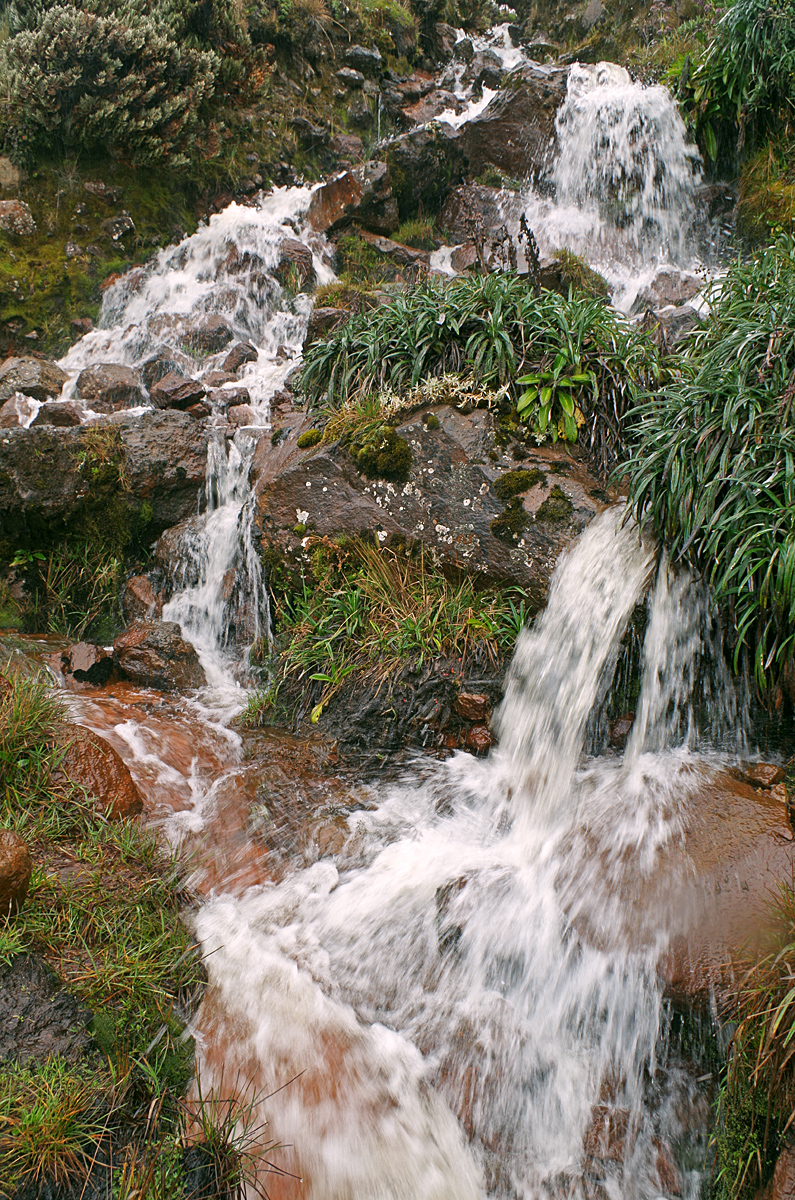
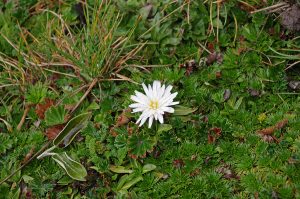
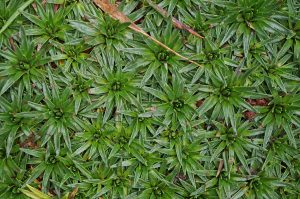
Where the road has cut into the adjacent rock and soil, layers of ash that have been deposited by volcanic eruptions are clearly evident. Along the way, we encountered waterfalls, alpine bogs and wildflowers growing in defiance of an intolerable environment. And, yes, we encountered snowfall at the earth’s equator!

cayambe_waterfall_0554_09282016_795x1200_90cayambe_alpineflower_0546_09282016_1200x795_90cayambe_alpinevegetation_0547_09282016_1200x795_90

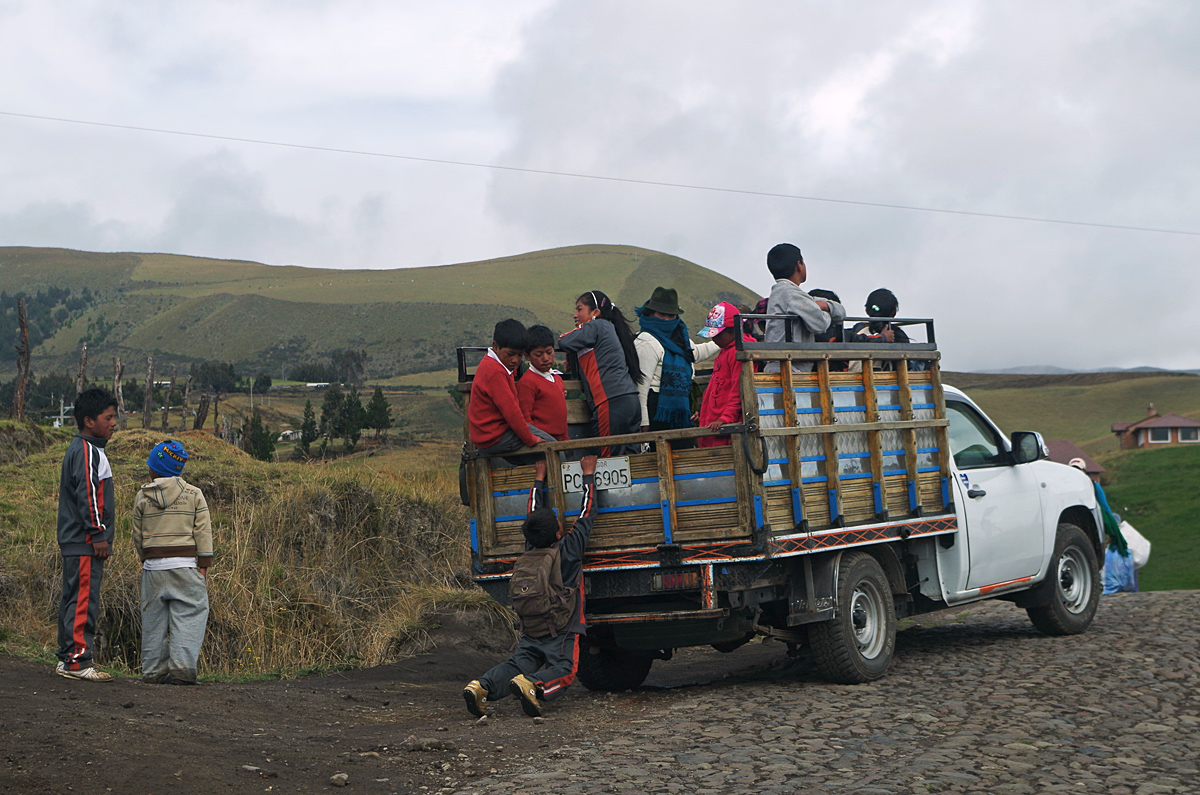
Prior to entering the National Park, we came along many groups of school children riding in the pickup trucks that serve as the local school buses. Others, who either missed their bus or whose families might not afford to pay for the transportation, were making the hour long plus trek on foot. One such group of about 15 children (plus one puppy) was extremely happy to encounter their “American friend”, our guide, who invited them to climb into the back of his truck for the ride home.

cayambe_schoolbus_0535_09282016_1200x795_90

One of the other highlights of the route to the Cayambe base camp is the “toll lady” who is positioned about 2 kilometers into the national park and watches for vehicles approaching from either direction. She then jumps into the center of the road, holding her hands in a prayerful position until she sees the driver’s hand held outside his window with her “toll” in hand. I am so sorry that I did not take her photo, particularly on our return trip, when she stood like a deer in our vehicle’s headlights. Less than 5 feet tall, missing most of her teeth and appearing to be partially blind, the toll lady would appear to be an octogenarian but is probably only a woman in her late fifties who has led a hard life.

cayambe_toyota_0644_09282016_1200x795_90cayambe_stuckvehicle_0537_09282016_1200x795_90

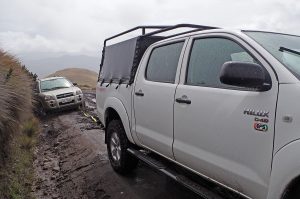
We were very fortunate to have St. Louis native David Meyer as our guide to Cayambe Volcano. David was hired on our behalf by Jaime Pallares, the manager of Molino San Juan, where we were staying in Cayambe. Jaime wanted to be sure that we had the best guide possible, and David was the answer. As a native American, David was fluent in English and the source of a tremendous amount of information about both the local population but Ecuador in general. In addition to recently beginning his services as a local tour guide, David is without doubt the most accomplished photographer of the Cayambe Volcano and has worked for the past 12 years as a missionary based in Ecuador with Crossworld ministries. He is an all-around good person whom we could not more highly recommend. In addition to offering a ride to school children, we took time to extricate drivers who were hopelessly stuck in the mud while trying to climb the mountain road without even four-wheel drive. David’s go-anywhere vehicle is a Toyota Hi-Luxe (only sold in South America and Australia) 2.5 liter turbo diesel, with ARB front and rear differential lockers among many other customizations.

cayambe_baselodge_0573_09282016_1200x795_90cayambe_summitrainbow_0599_09282016_1200x795_90

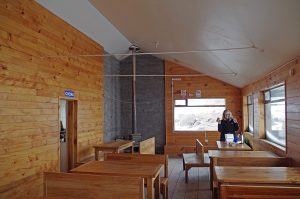
Eventually we reached the Cayambe Volcano base camp, where we took shelter from the wind and snow, consuming fluids and sugars to help us to compensate for the 15,000 ft. elevation. It is this same base camp that is used by the technical ice climbers who continue another 3,991 feet on foot over rock and glaciers to reach the summit. Most of the climbers take taxi trucks to the base camp and begin their ascent at midnight in order to reach the summit for sunrise.

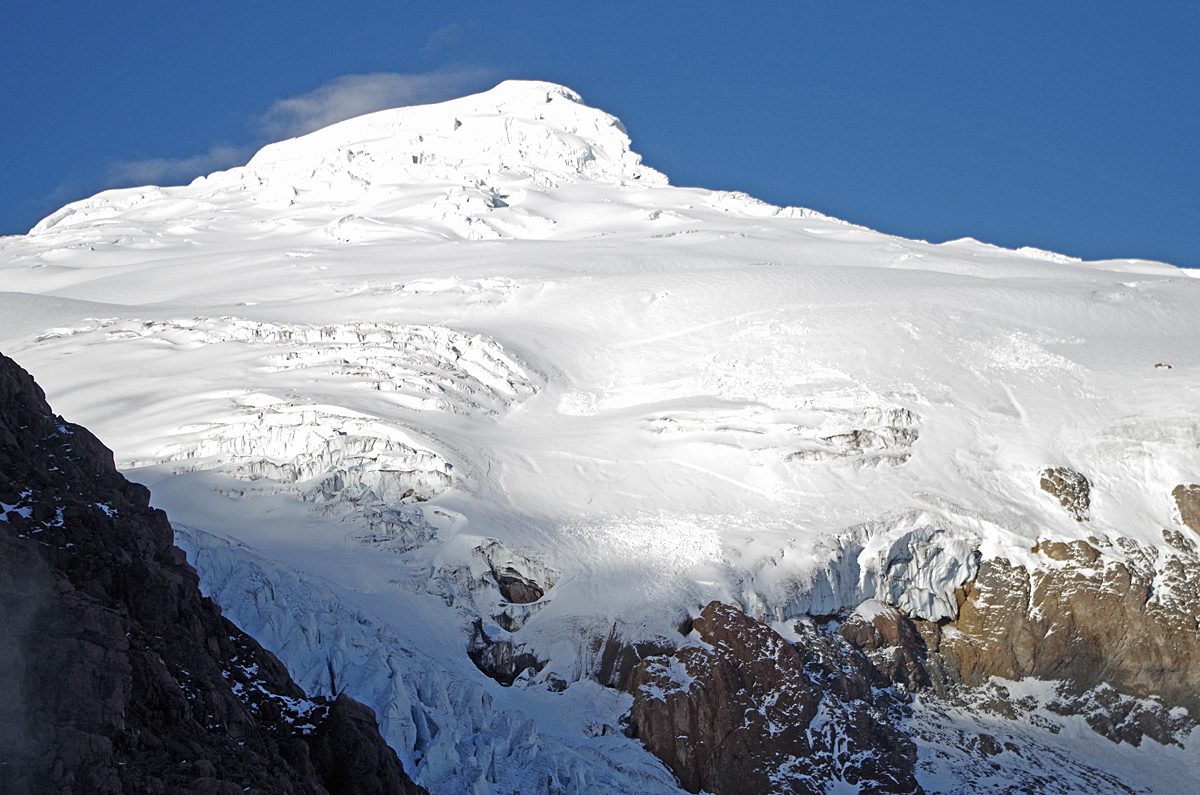
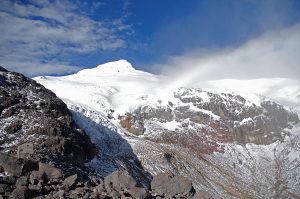
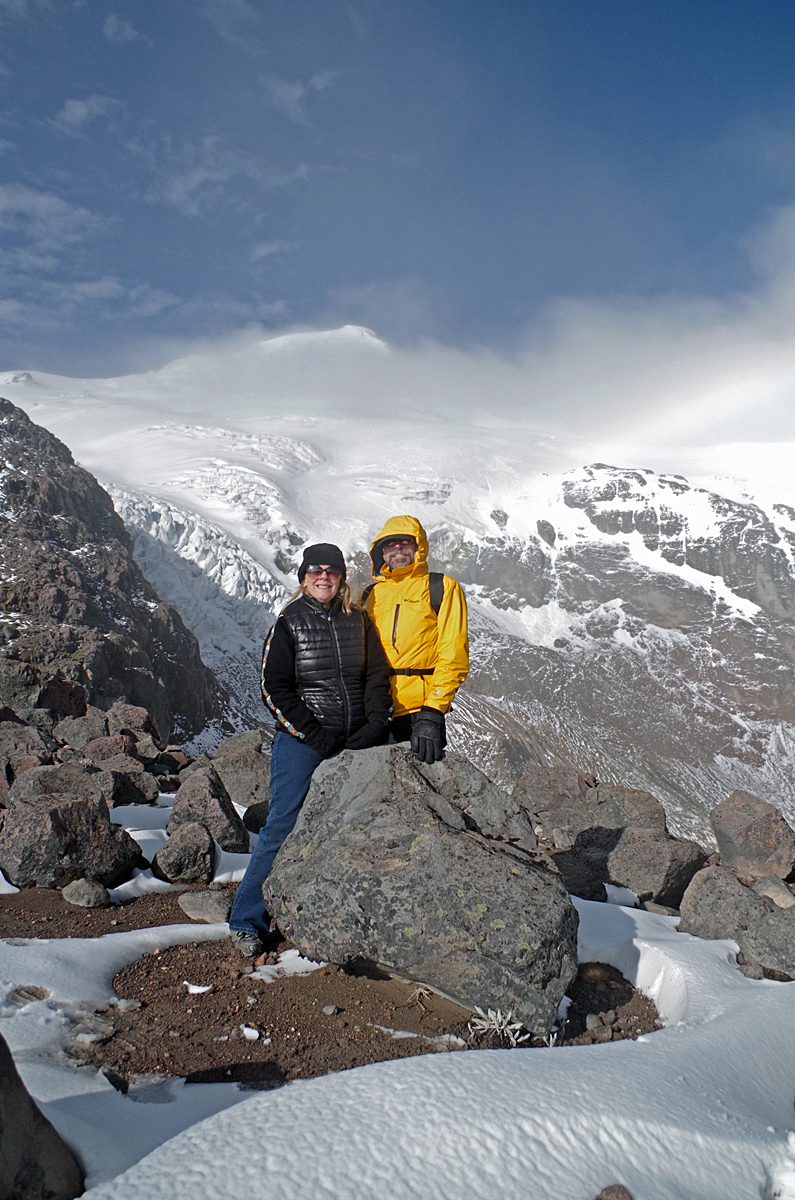
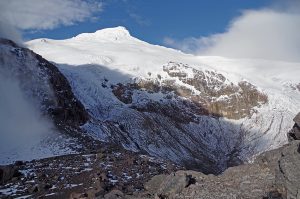
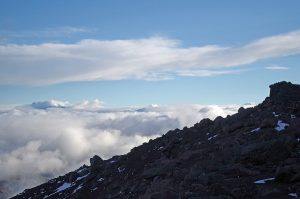
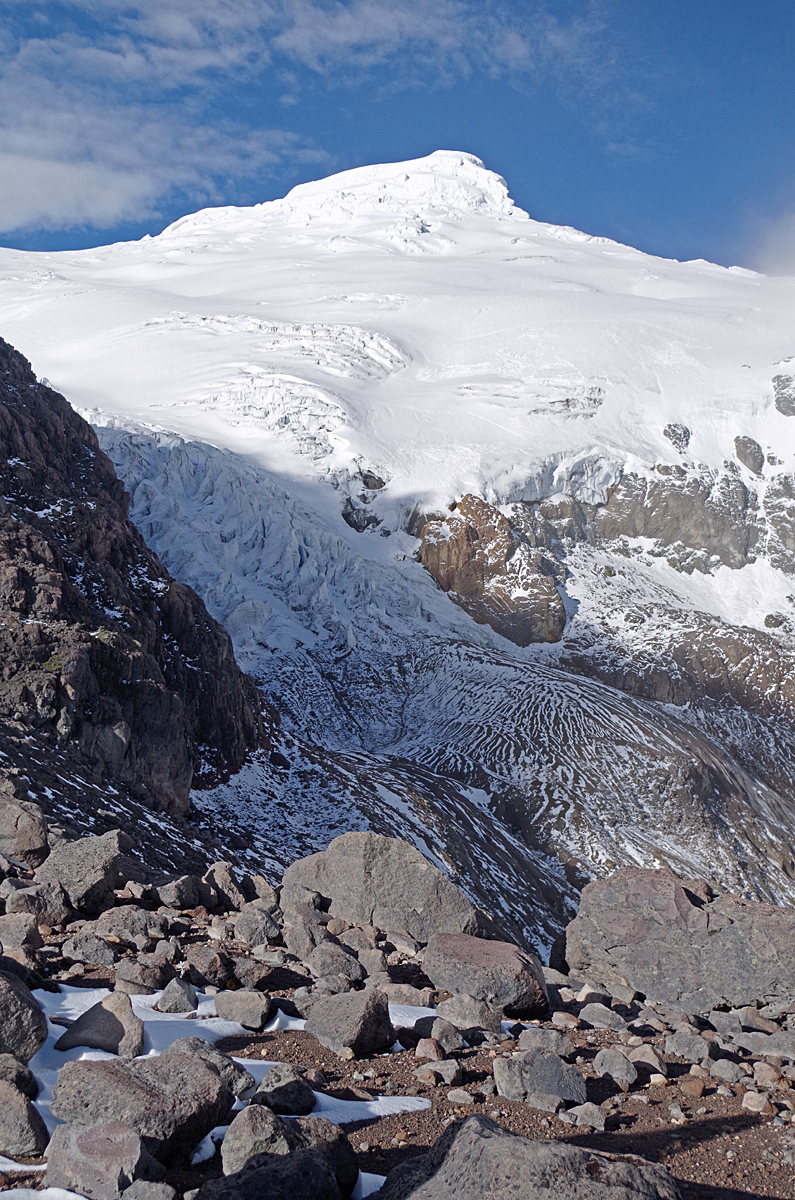
cayambe_barbarapeter_0586_09282016_795x1200_90Cayambe Volcano is the only place on Earth that is located on the Equator and gets snow. When we arrived, the summit was obscured by clouds, but the clouds suddenly cleared and a rainbow was added to our unwordly view of the third highest mountain in Ecuador, all volcanoes. As the skies cleared even further, David and I hiked along the ridge line, where we were able to get a view of Antisana Volcano (the fourth highest in Ecuador) in the distance, looking toward the Amazon basin.

cayambe_summitglaciers_0607_09282016_1200x795_90cayambe_distantsummits_0633_09282016_1200x795_90

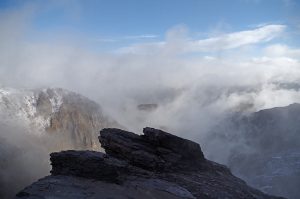
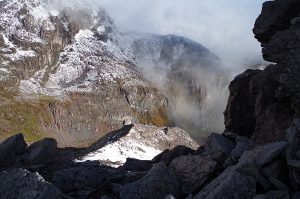
It is difficult to adequately express the scale of this grandeur. In one photo, what appears to be a small balanced rock perched in the distance is probably the size of a large truck. Glaciers are difficult to differentiate from the newly fallen snow, standing out only slightly with the bluish color of their ancient ice. Drops beyond jagged outcrops of rock literally descent thousands of feet.

cayambe_ridgeview_0616_09282016_1200x795_90cayambe_balancedrock_0604_09282016_1200x795_90

All in all, our visit to Cayambe-Coca National Park and the Cayambe Volcano represents a lifetime experience that we will never forget!

cayambe_summitglaciers_0603_09282016_795x1200_90

Molino San Juan – La Copañia, Cayambe

One of the highlights of our recent trip to Ecuador was our two-night stay at Molino San Juan, in the shadow of Cayambe Volcano and on the outskirts of the city of Cayambe, Pichincha province. The history of Molino San Juan, part of Hacienda La Copañia, along with the hospitality extended to us by its manager, Jaime Pallares, and his staff was nothing short of remarkable.
jaime_staff_0648_09292016_1200x795_90

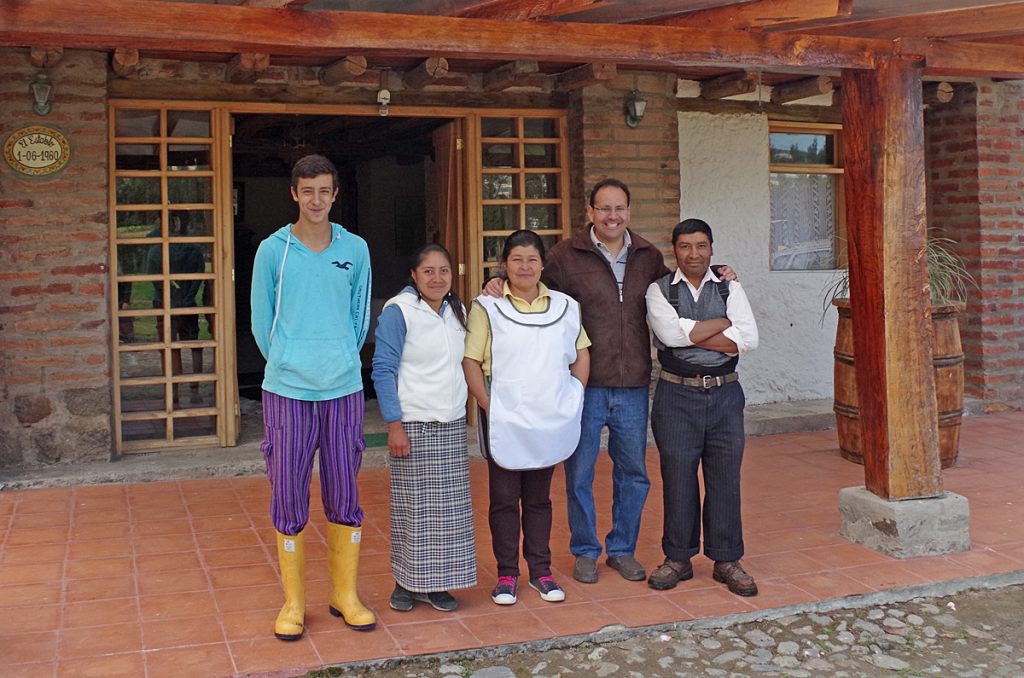
During our off-season stay, we were the only guests at Molino San Juan, considered the “hotel” of Hacienda La Copañia, and we were treated like royalty. Jaime told us that he was there to ensure that we enjoyed our stay, and he proved his commitment to that goal time and again. Let me explain that he is one of the family members who own this remarkable hacienda, an entrepreneur with grand plans and a earlier career with Hilton Hotels. During the first night of our stay, in order to be absolutely certain that everything would be perfect, he actually stayed in an upstairs guestroom rather than going home for the night!
molinosanjuan_guestroom_0513_09282016_1200x795_90molinosanjuan_commonroom_0519_09282016_1200x795_90

molinosanjuan_commonroom_0509_09282016_1200x795_90

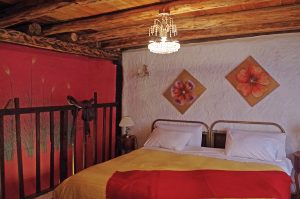
Heated living spaces are not the norm in Ecuador, and our desire for greater warmth in our room was met with additional blankets, a space heater in our room, and hot water bottles in our bed. Simply remarkable!
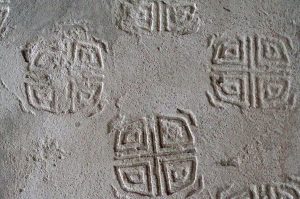
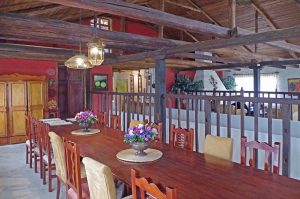
molinosanjuan_floorpatterns_0529_09282016_1200x795_90molinosanjuan_diningroom_0507_09282016_1200x795_90

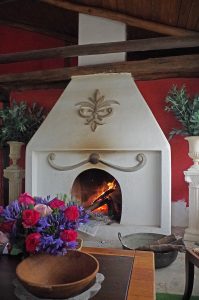
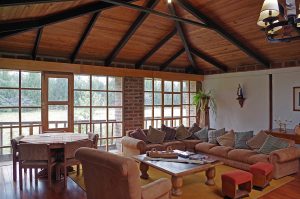
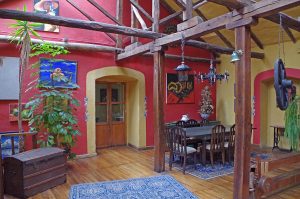
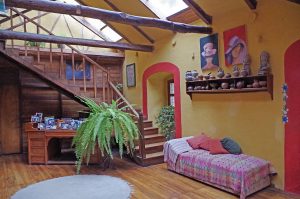
Molino San Juan, part of the family-owned Hacienda, is a former cattle barn that was built in the 1960s and used through the 1970s. The floors bear the original imprint of cheese molds, and the rooms are uniquely built around stanchions and cattle feeding troughs. The walls are decorated with artwork that has been created by Jaime’s wife and mother-in-law. Our stay included half board, and our breakfasts and dinners were carefully prepared and delicious – always of course including bizcochos, the tasty signature pastries of Cayambe. We were also provided with box lunches to take along during our travels away from Molina San Juan.
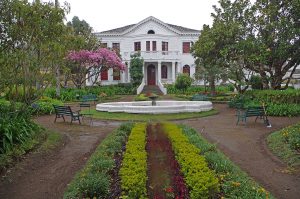
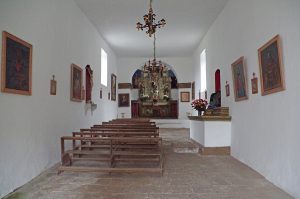
thehacienda_0479_09282016_1200x795_90lacompania_chapel_0484_09282016_1200x795_90

lacompania_0503_09282016_1200x795_90

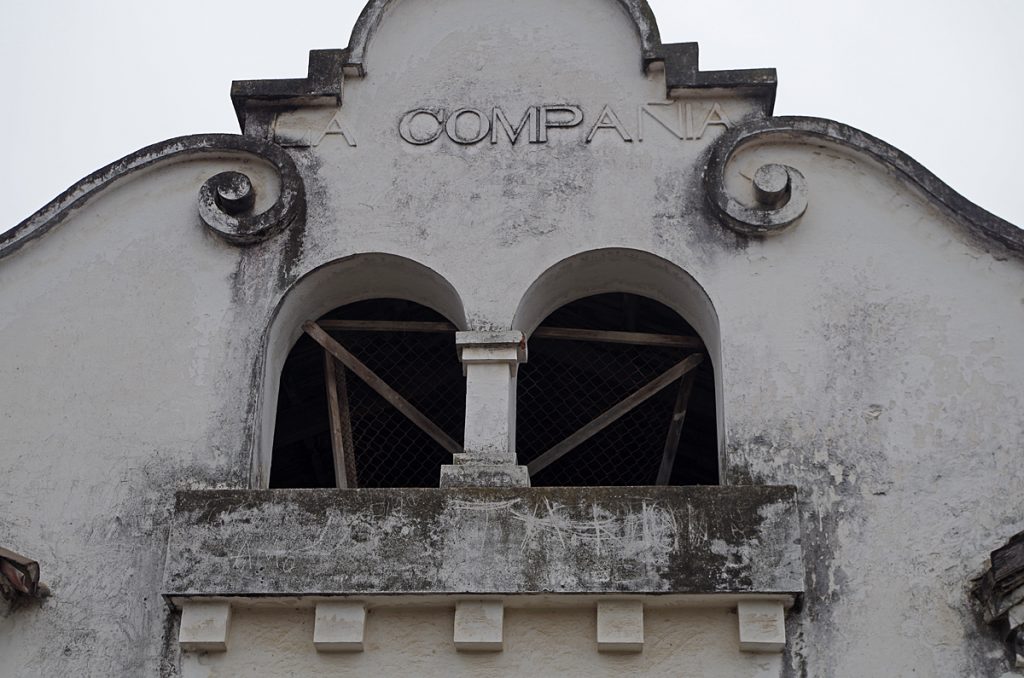
Let me explain more about the Hacienda and its remarkable history. As is the case with other Haciendas in Ecuador, Molina San Juan consists of 500 hectares that was originally founded by Jesuits half a millennium ago. Remarkably, the grand hacienda, chapel, and original buildings still stand, with Sunday Mass still celebrated once monthly in the old chapel. After the Jesuit period, the property was purchased by Roberto Jarrin back in 1860, with the most fascinating period of the Hacienda’s history commencing when Aquiles Jarrin built the Molino San Juan hydraulic grist mill late in the 19th century.
museum_restaurant_0474_09282016_1200x795_90museum_restaurant_0478_09282016_1200x795_90

Much of that hydraulic mill greats diners the Hacienda’s fine restaurant and museum, where we were invited to view the inner workings of the mill in the space below the main floor. The mill, which processed grains from surrounding farms for many decades, was built in France, disassembled, and shipped across the Atlantic, around the horn of South America, up the Pacific Coast to Guayaquil, then over the Andes Mountains for a six month trek to Cayambe where it was reassembled. This remarkable feat brought to mind the 1982 Werner Herzog film, Fitzcarraldo.
roseshowroom_0491_09282016_1200x795_90roseshowroom_0499_09282016_1200x795_90

roseshowroom_0495_09282016_1200x795_90roseshowroom_0500_09282016_1200x795_90

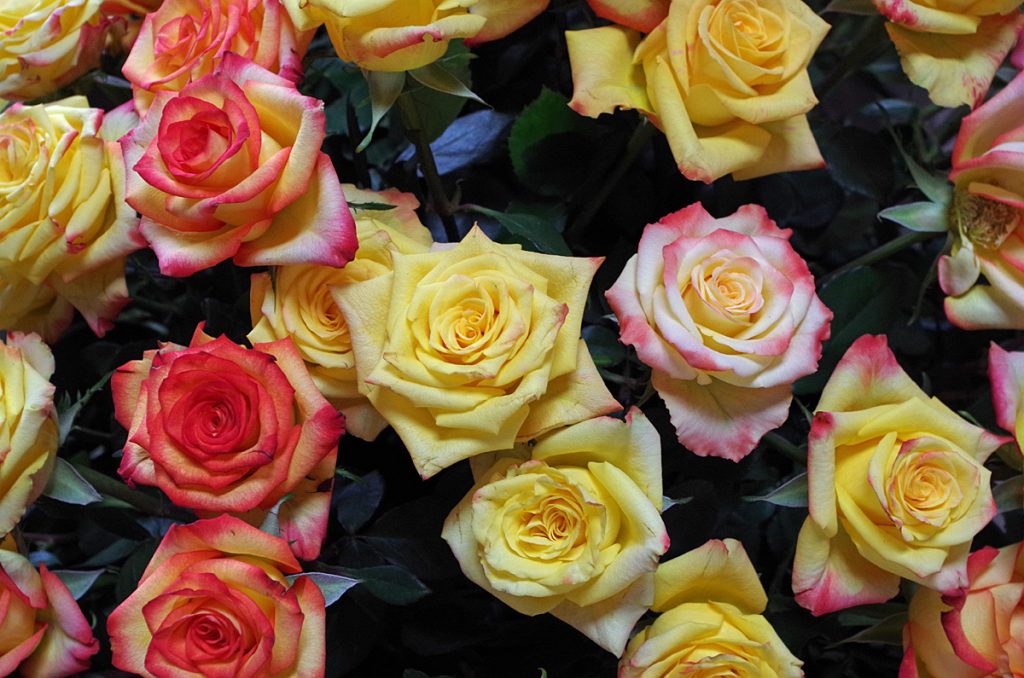
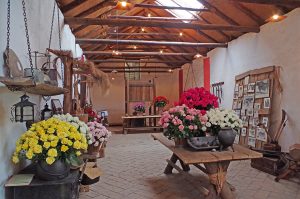
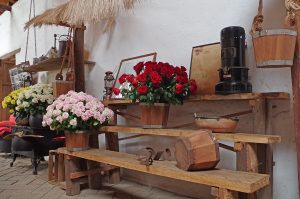
Today, the main source of revenue for the Hacienda is the cultivation of roses. Ecuador is the world’s third largest producer of cut flowers, most of which are roses, and most of which are grown in Pichincha province. Roses are one of the country’s leading exports, after crude oil and bananas – which we also found growing in abundance. Most of the roses grown at the Hacienda are shipped to markets in Russia, the United States, and Holland (where they are re-marketed as local products.)


roses_0492_09282016_1200x795_90roses_0493_09282016_1200x795_90

roses_0501_09282016_1200x795_90

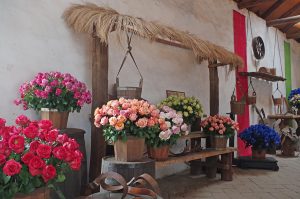
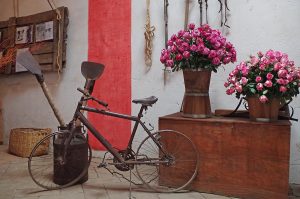
As part of our visit to Molino San Juan, Jaime gave us a personal tour of the Hacienda’s rose showroom. Displaying dozens of artistic arrangements, the roses are replaced every three days, ensuring that the blossoms are at all times nothing less than perfect.
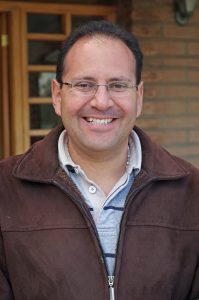
molinosanjuan_jaimepallares_0649_09292016_1200x795_90

In addition to our personal tour of the hacienda grounds, museum, chapel and rose showroom, Jaime arranged for guide service to Cayambe Volcano – another outstanding part of our visit that will be covered in another post. If you should be fortunate enough to visit Ecuador, be sure to include a visit to Cayambe and a stay at Molino San Juan!