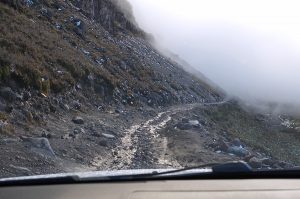
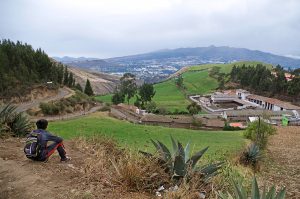
Cayambe-Coca National Park is the largest national park in Ecuador, extending all the way to the Amazon basin, where another highlight of our recent visit to Cayambe was our trip to the base of Cayambe Volcano. The trip from Cayambe to Cayambe-Coca National Park is an adventure in itself, steadily gaining in elevation as you progress from cobblestones and haciendas to the park entrance, treeline, and a single-lane gravel road that is characterized by steep drop-offs to one side and muddy ruts up to 2 feet in depth.
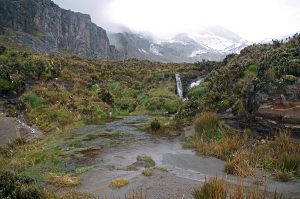
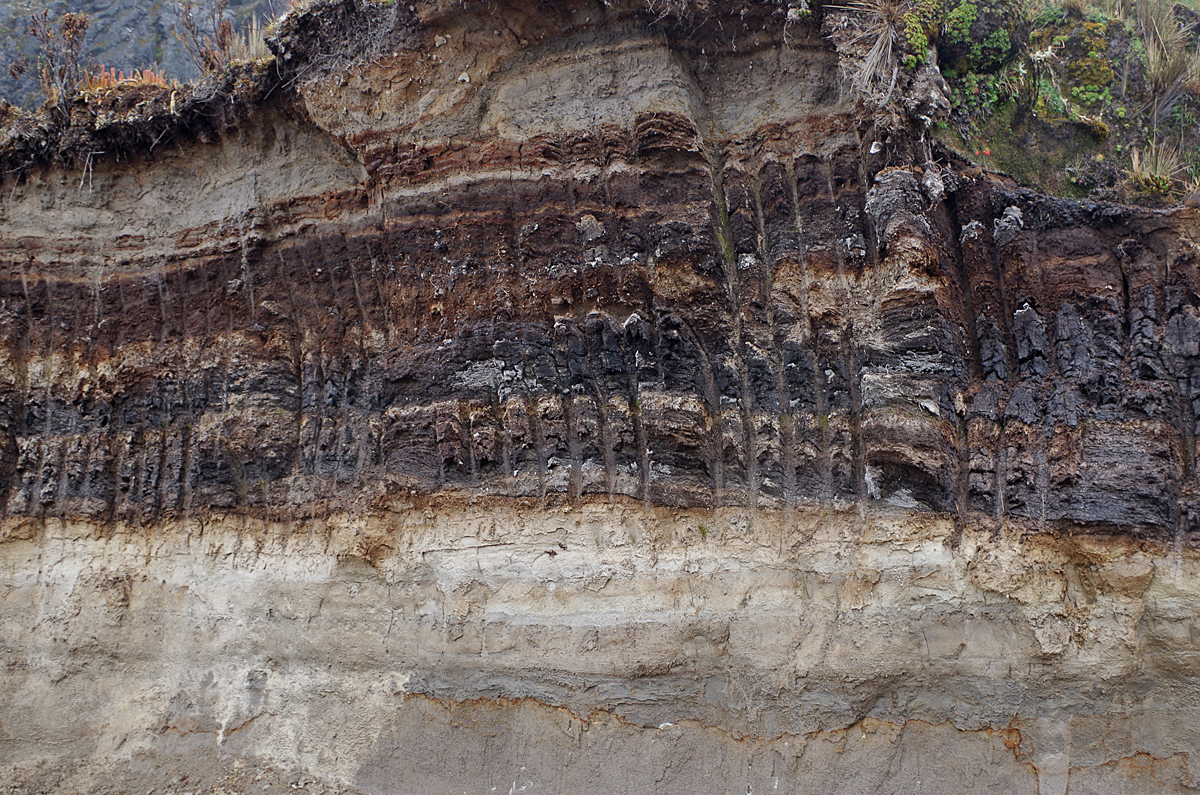
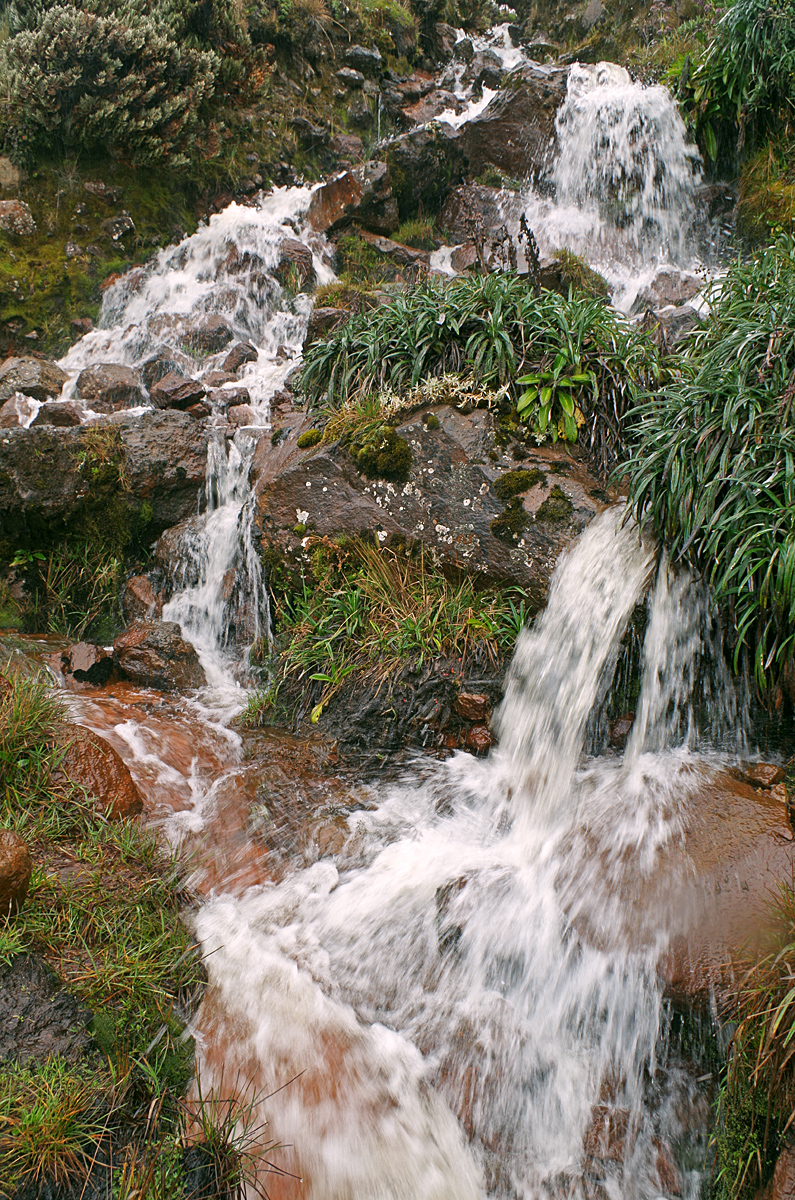
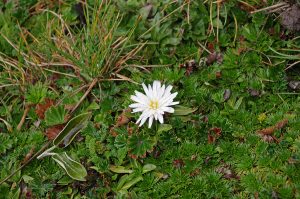
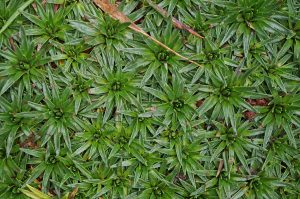
Where the road has cut into the adjacent rock and soil, layers of ash that have been deposited by volcanic eruptions are clearly evident. Along the way, we encountered waterfalls, alpine bogs and wildflowers growing in defiance of an intolerable environment. And, yes, we encountered snowfall at the earth’s equator!
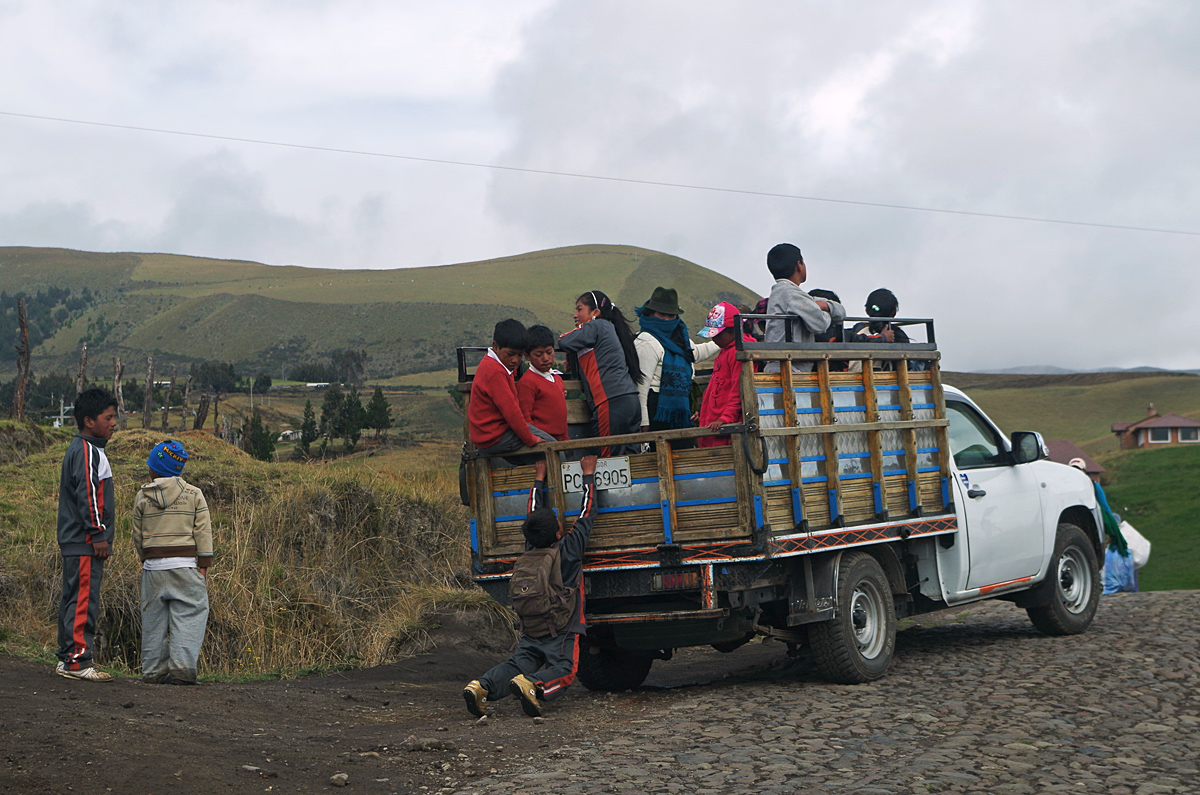
Prior to entering the National Park, we came along many groups of school children riding in the pickup trucks that serve as the local school buses. Others, who either missed their bus or whose families might not afford to pay for the transportation, were making the hour long plus trek on foot. One such group of about 15 children (plus one puppy) was extremely happy to encounter their “American friend”, our guide, who invited them to climb into the back of his truck for the ride home.
One of the other highlights of the route to the Cayambe base camp is the “toll lady” who is positioned about 2 kilometers into the national park and watches for vehicles approaching from either direction. She then jumps into the center of the road, holding her hands in a prayerful position until she sees the driver’s hand held outside his window with her “toll” in hand. I am so sorry that I did not take her photo, particularly on our return trip, when she stood like a deer in our vehicle’s headlights. Less than 5 feet tall, missing most of her teeth and appearing to be partially blind, the toll lady would appear to be an octogenarian but is probably only a woman in her late fifties who has led a hard life.
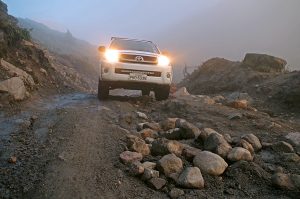
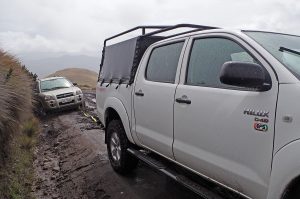
We were very fortunate to have St. Louis native David Meyer as our guide to Cayambe Volcano. David was hired on our behalf by Jaime Pallares, the manager of Molino San Juan, where we were staying in Cayambe. Jaime wanted to be sure that we had the best guide possible, and David was the answer. As a native American, David was fluent in English and the source of a tremendous amount of information about both the local population but Ecuador in general. In addition to recently beginning his services as a local tour guide, David is without doubt the most accomplished photographer of the Cayambe Volcano and has worked for the past 12 years as a missionary based in Ecuador with Crossworld ministries. He is an all-around good person whom we could not more highly recommend. In addition to offering a ride to school children, we took time to extricate drivers who were hopelessly stuck in the mud while trying to climb the mountain road without even four-wheel drive. David’s go-anywhere vehicle is a Toyota Hi-Luxe (only sold in South America and Australia) 2.5 liter turbo diesel, with ARB front and rear differential lockers among many other customizations.
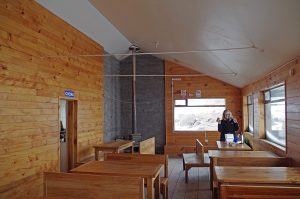
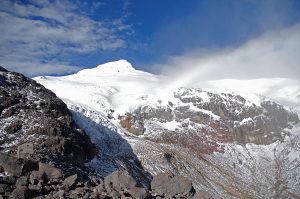
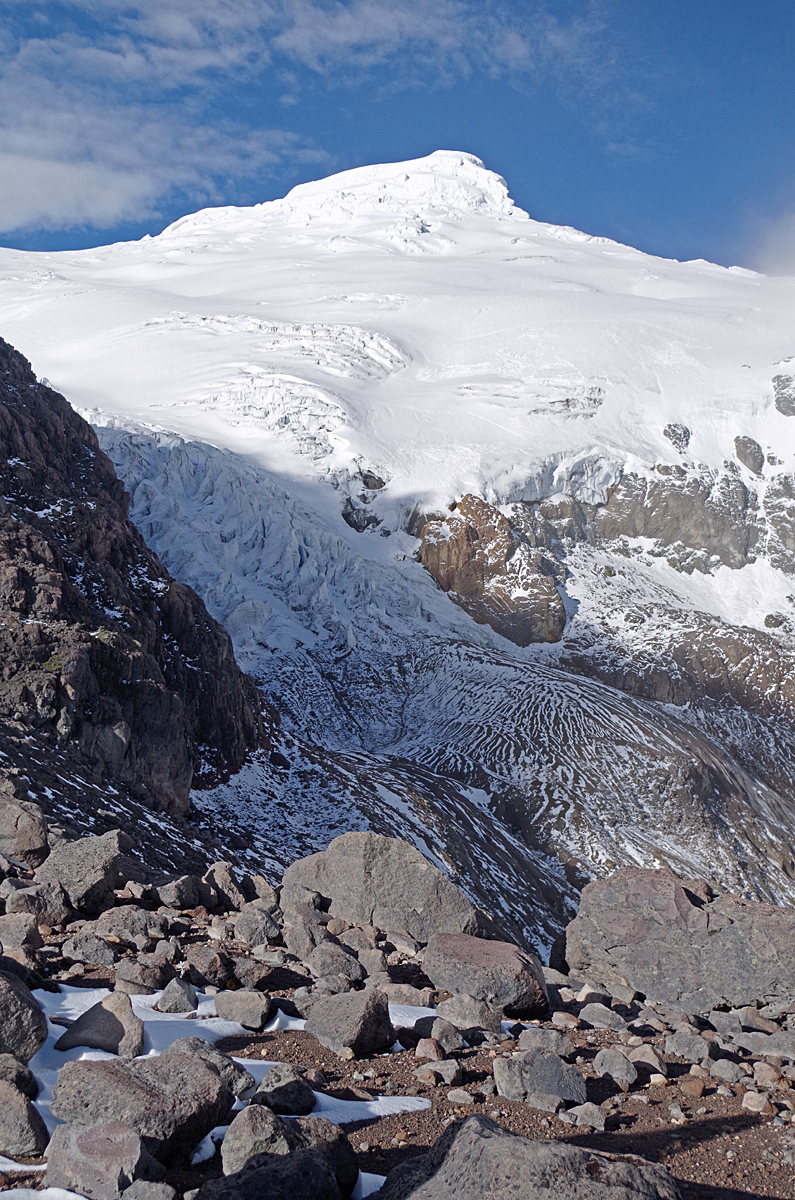
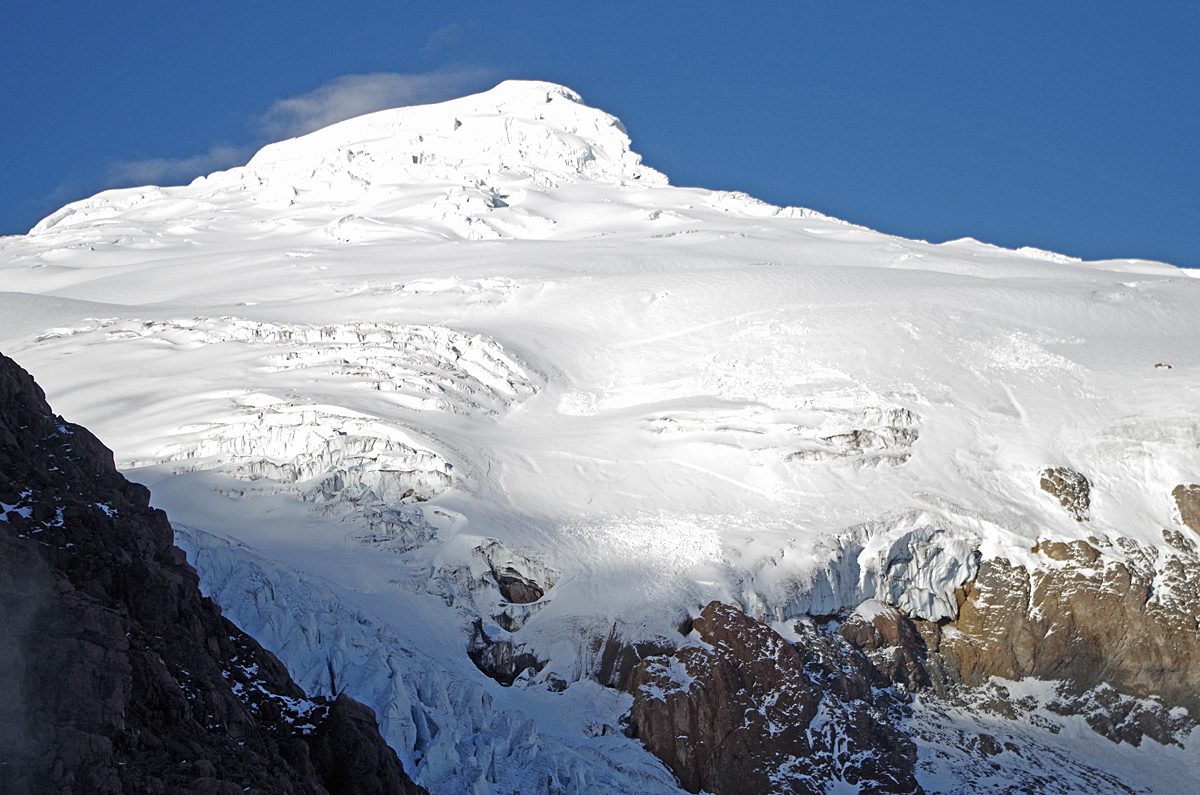
Eventually we reached the Cayambe Volcano base camp, where we took shelter from the wind and snow, consuming fluids and sugars to help us to compensate for the 15,000 ft. elevation. It is this same base camp that is used by the technical ice climbers who continue another 3,991 feet on foot over rock and glaciers to reach the summit. Most of the climbers take taxi trucks to the base camp and begin their ascent at midnight in order to reach the summit for sunrise.
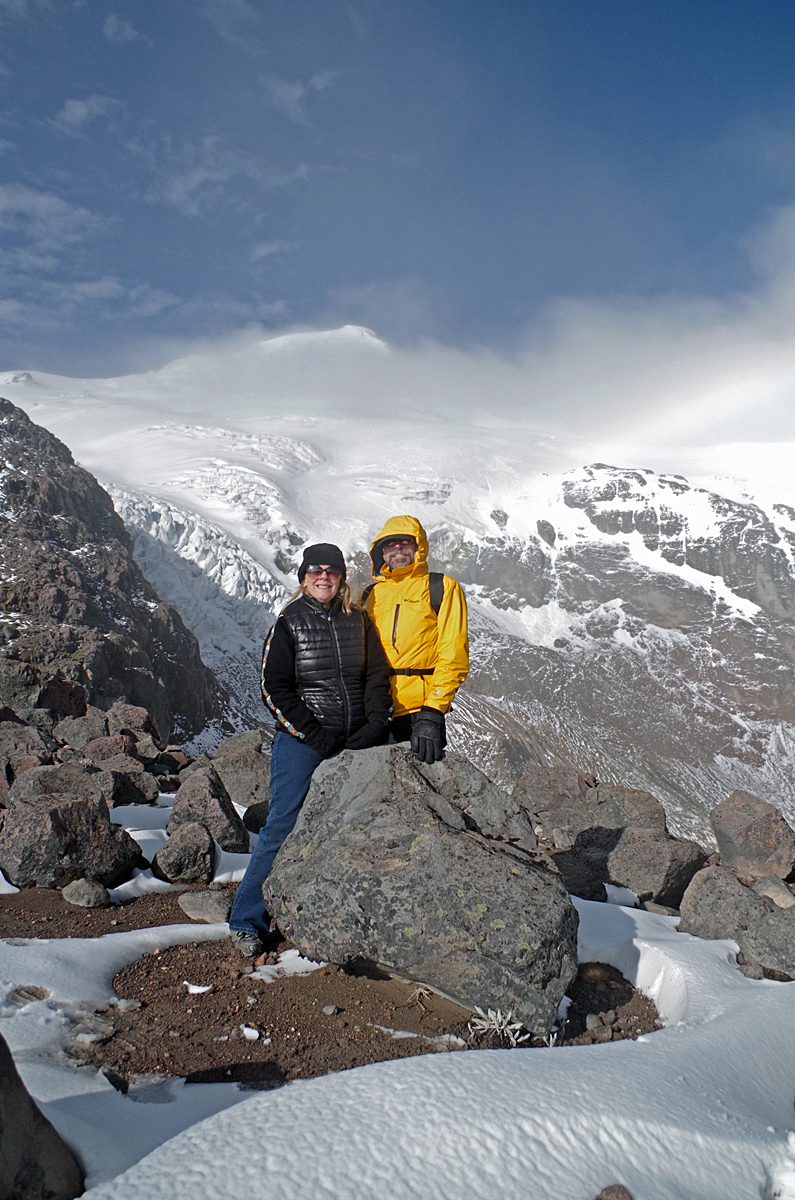 Cayambe Volcano is the only place on Earth that is located on the Equator and gets snow. When we arrived, the summit was obscured by clouds, but the clouds suddenly cleared and a rainbow was added to our unwordly view of the third highest mountain in Ecuador, all volcanoes. As the skies cleared even further, David and I hiked along the ridge line, where we were able to get a view of Antisana Volcano (the fourth highest in Ecuador) in the distance, looking toward the Amazon basin.
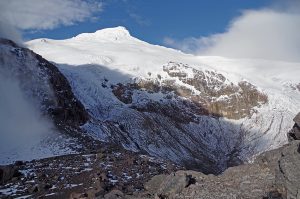
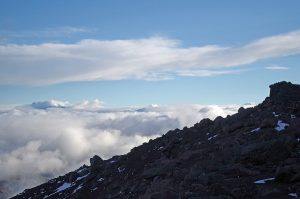
It is difficult to adequately express the scale of this grandeur. In one photo, what appears to be a small balanced rock perched in the distance is probably the size of a large truck. Glaciers are difficult to differentiate from the newly fallen snow, standing out only slightly with the bluish color of their ancient ice. Drops beyond jagged outcrops of rock literally descent thousands of feet.
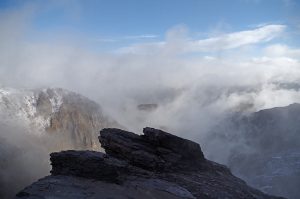
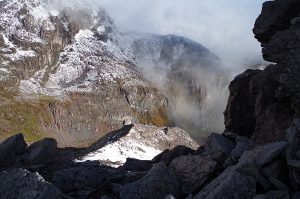
All in all, our visit to Cayambe-Coca National Park and the Cayambe Volcano represents a lifetime experience that we will never forget!